
Published 1 October 2026
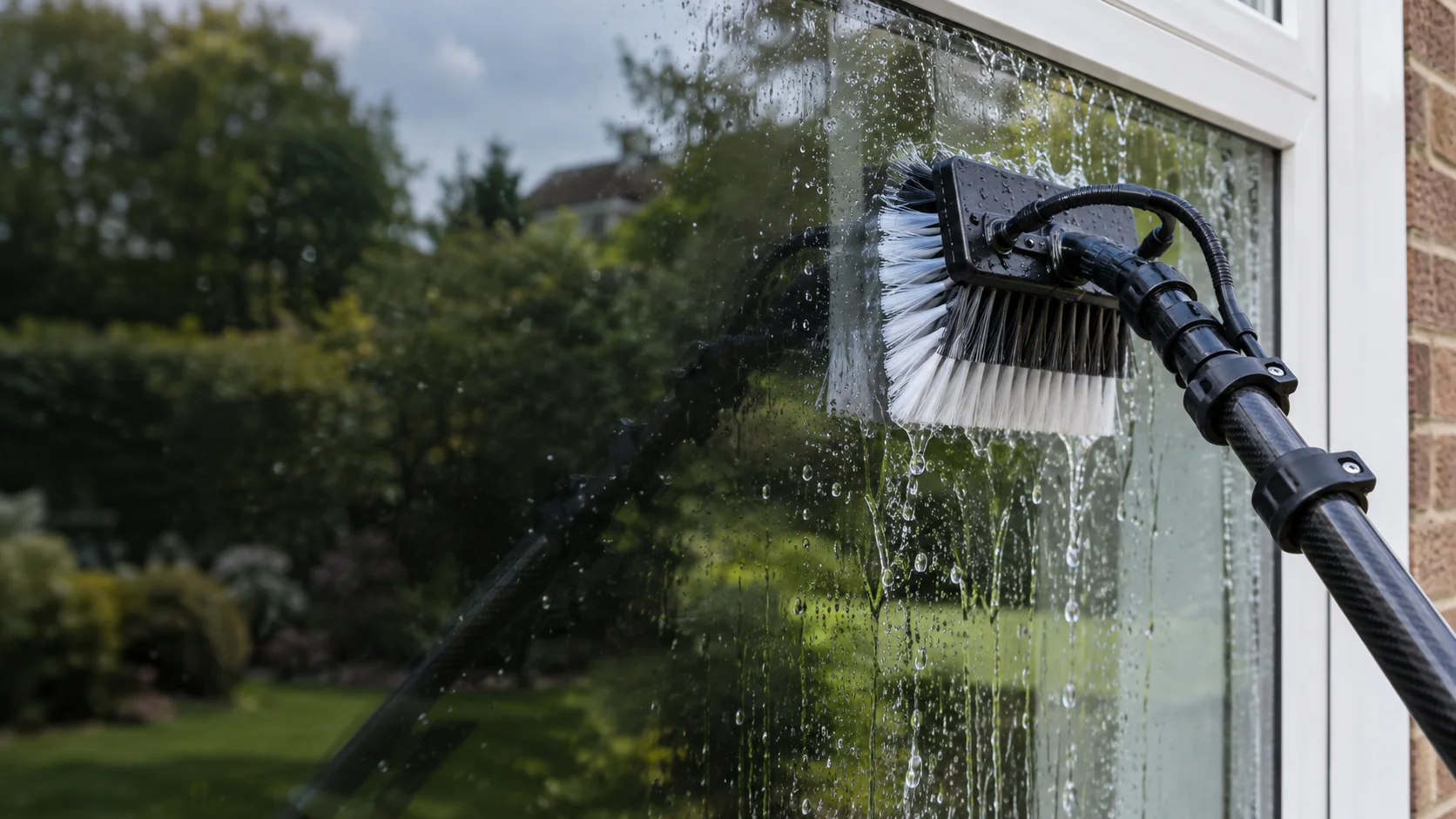
Purified water window cleaning is a method used to wash exterior glass with water that has had dissolved minerals and other impurities removed. The purified water is carried through a hose and a water-fed pole to a brush at the window. The brush loosens dirt from the glass, frames and agreed surrounding surfaces, then the window is rinsed and left to dry naturally.
For many homes in Kent, the method offers a practical way to clean suitable upper-floor windows from ground level. It can also reduce the need to move a ladder repeatedly around a property. However, the right approach still depends on the building, the condition of the windows, safe access and exactly what has been included in the quotation.
Purified water cleaning: pros and limitations
Purified water with a water-fed pole
Pros
- Can reach suitable upper exterior windows from ground level.
- Can include accessible frames and sills when agreed.
- The final rinse is designed to dry naturally.
Cons / things to consider
- Access, pole angle and window condition can limit suitability.
- Windows remain wet until the rinse dries.
- Routine cleaning does not repair seals or remove every stubborn mark.
What makes the water “pure”?
Ordinary tap water contains dissolved minerals. The precise amount varies by location, but when tap water dries on glass those minerals can be left behind as marks. Professional purified water systems treat the water to remove the minerals that would otherwise remain on the surface.
The treatment process can involve reverse osmosis, deionisation or a combination of the two. What matters to the customer is the result of that treatment: the water used for the final clean contains very little dissolved material, so it can dry without the residue associated with untreated tap water.
Purified water is not a chemical coating and it does not make a window permanently resistant to dirt. It is simply treated water used as part of the cleaning process.
How water-fed pole cleaning works
A typical exterior clean follows a straightforward sequence:
- The property and access are checked. Gates, extensions, conservatories, narrow paths, parked vehicles and overhead obstacles can all affect how a window can be reached.
- The agreed surfaces are wetted and brushed. Water passes through the pole to the brush head. The brush is used to agitate dirt on the glass and, where included, the frames and sills.
- Loose dirt is rinsed away. The window receives a final rinse with purified water so loosened dirt and residue can run off.
- The glass is left to dry. Because the rinse water contains very few dissolved minerals, the glass does not normally need to be wiped with a cloth or squeegee afterwards.
The equipment does not remove the need for care. The cleaner still needs to use the brush methodically, rinse properly and consider vents, damaged seals, loose fittings and delicate surfaces.
Why do professional cleaners use water-fed poles?
One advantage is reach. A suitable pole system can allow many first-floor windows to be cleaned while the operator remains on the ground. It may also help with windows positioned above flower beds or other areas where repeatedly placing a ladder would be awkward.
The method can clean more than the centre of the pane. If agreed in the job, the brush can be used on accessible frames and sills as well as the glass. That is useful because dirty frames can release residue onto freshly cleaned glass if they are ignored.
There are limits. A water-fed pole is not automatically suitable for every roof window, enclosed courtyard or window above a large extension. Access, pole angle, building height and surrounding obstacles have to be considered. Some stubborn deposits may also need separate assessment rather than being treated as part of routine window cleaning.
Why might windows look wet after the cleaner leaves?
With traditional window cleaning, glass is usually dried with a squeegee. Purified water cleaning is different: the final rinse is designed to be left on the window and allowed to evaporate. Seeing water droplets immediately after the clean does not mean the work is unfinished.
On a first clean, dirt can sometimes remain around neglected frames, seals or vents. Thorough agitation and rinsing are especially important when a property has not been cleaned for some time. Existing scratches, failed double-glazing seals, mineral staining or paint spots will not necessarily be removed by a routine purified water clean.
Is purified water cleaning right for every home?
It suits many modern exterior windows, but the property should be considered rather than assuming one method fits all. Older painted frames, loose seals, damaged vents, specialist glazing and restricted access may change what can be cleaned or how the work should be approached.
When requesting a quote, mention any windows above conservatories or extensions, locked rear access, delicate planting, pets, and known damage. Say whether you want glass only or would also like frames and sills included. Interior window cleaning is a separate task and should not be assumed to form part of an exterior purified water service.
Purified water window cleaning in Kent
Glass Ninjas uses purified water with water-fed poles for suitable exterior window cleaning across Kent. You can read more about our residential window-cleaning service, including what affects access and quotations.
If you are deciding between a single visit and an ongoing arrangement, our guide to how often windows should be cleaned explains the factors worth considering. Visit the quote page with your postcode, property type and any access details when you are ready to discuss your home.
Frequently asked questions
Does purified water window cleaning use detergent?
The method normally relies on purified water, brushing and rinsing rather than detergent for routine exterior cleaning. Unusual deposits may need separate assessment before any additional treatment is considered.
Are windows dried after a purified water clean?
They are normally left to dry naturally after the final purified water rinse. The low mineral content is what helps avoid the residue that untreated tap water can leave behind.
Can water-fed poles reach every window?
No. Building height, roof shape, extensions, obstacles and the angle available from the ground all affect reach. Photographs and property details help establish what is practical before a quotation is agreed.
Are frames and sills included?
That depends on the agreed scope. Ask for the glass, frames and sills you want cleaned to be listed clearly in your quotation rather than assuming every surface is included.